

First Nations Leaders in Peru
A 21-day international service-learning experience centred on Indigenous leadership, intercultural exchange, and community partnership.
June, 2027 · 21 Days · Villa Rica & Cusco, Peru
The Program
First Nations Leaders in Peru is an international service-learning program built in deep partnership with the Yanesha people of Villa Rica, Peru. It has been developed with a strong focus on Indigenous Australian student leadership, and is open to aligned participants seeking an ethical, community-led learning experience.
Live and work alongside the Yanesha community, co-creating projects that support their self-determined goals. Connect across Indigenous cultures, share knowledge, and return home with a transformed understanding of your own leadership potential and your place in the world.
This program is grounded in the principle that Indigenous wisdom and knowledge systems are global strengths, here and abroad. Reflection, dialogue, and critical engagement are embedded throughout to help students connect local community realities to wider global systems and responsibilities.
For groups wanting to compare perspectives across continents, this program can be paired with our Seaside Service in Brazil program as a dual-destination experience. Contact us to discuss.

Your 21-Day Program at a Glance

-
DAY 1
Arrival — Welcome to Peru
Fly into Jauja Airport (JAU), nestled high in the Andes at 3,400m. 3 Bricks staff will be waiting to greet you. We drive to homebase in Villa Rica — 180km from Jauja through dramatic mountain and jungle landscapes — with a stop along the way for your first taste of local food.
On arrival at our homebase hotel in Villa Rica, settle in, meet the group, and enjoy your first traditional Peruvian dinner together.
DAY 2
Cultural Orientation — The Beginning of a Relationship
Our first full day begins with a program orientation co-led by a Yanesha community leader from our project site. This is not a briefing, it is the beginning of a relationship.
We spend the afternoon exploring Villa Rica town: the central market, the plaza, and the surrounding coffee farms that define this region. In the evening, our first guided reflection activity introduces the frameworks of global citizenship and ethical engagement that will run through the whole program.
-
Service, cultural excursions, and leadership activities alternate across twelve days. Excursion days are deliberately placed to give students mental and physical recovery between intensive service periods.
DAY 3
Service Begins
Service begins. Working on projects planned directly with Yanesha leaders — which may include water infrastructure, community centre construction, medical brigades, native plant nurseries, or cultural documentation work.
Our first day of service introduces the community and the work ahead. In the evening, students reflect on what they have observed and what assumptions they arrived with.
DAY 4
Service — Deep Work
A full day of service. We push into the heart of the project — whatever form that takes — working alongside community members under the guidance of Yanesha leaders.
Evening reflection explores the economics of international development: who funds what, who decides what gets built, and what communities actually need versus what outside organisations assume they need.
DAY 5
Coffee Economy — Lago Ocunal
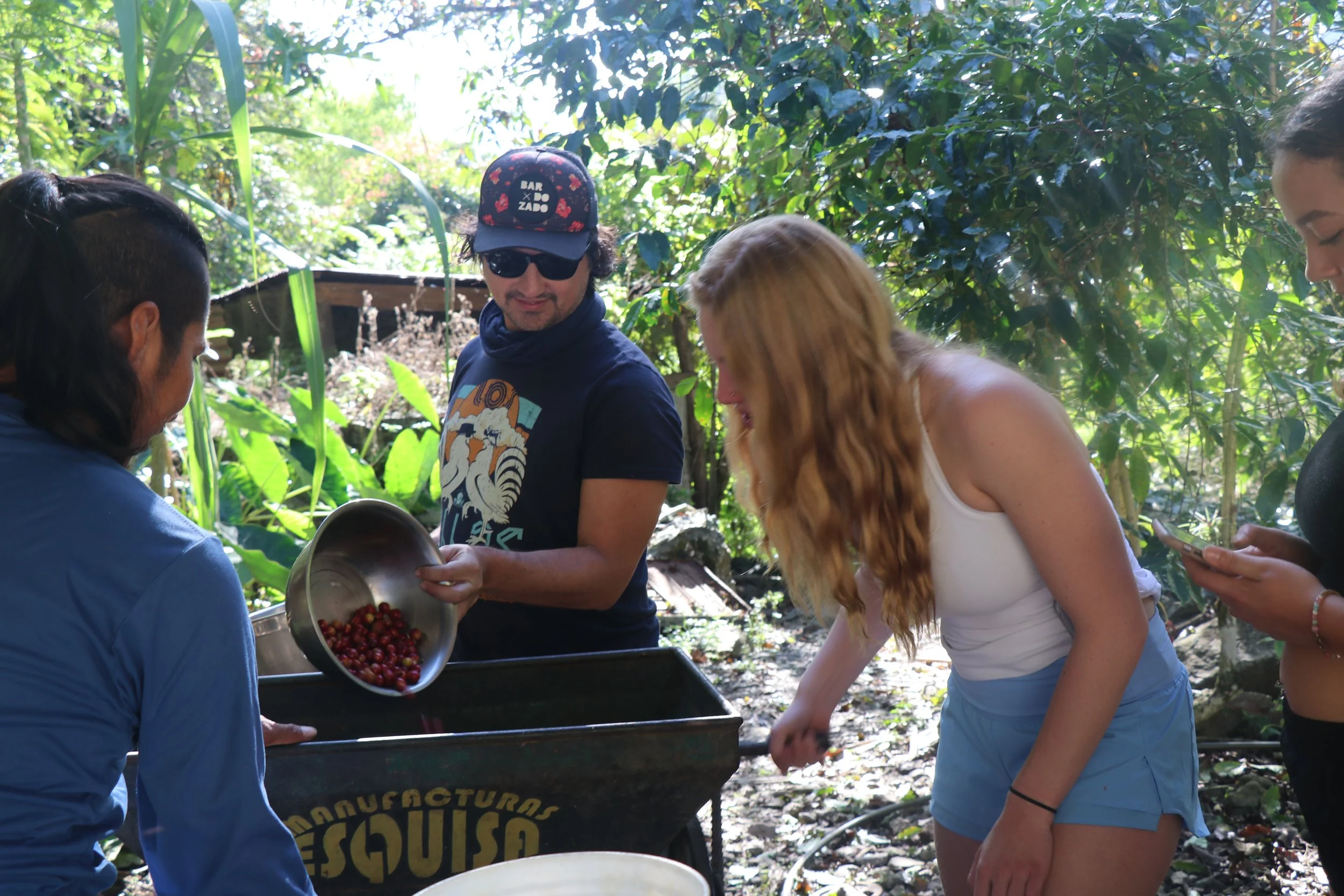
A cultural and learning excursion day. In the morning we take a guided tour of the local coffee economy — visiting a working farm, learning the process from plant to export, and participating in a tasting led by local producers.
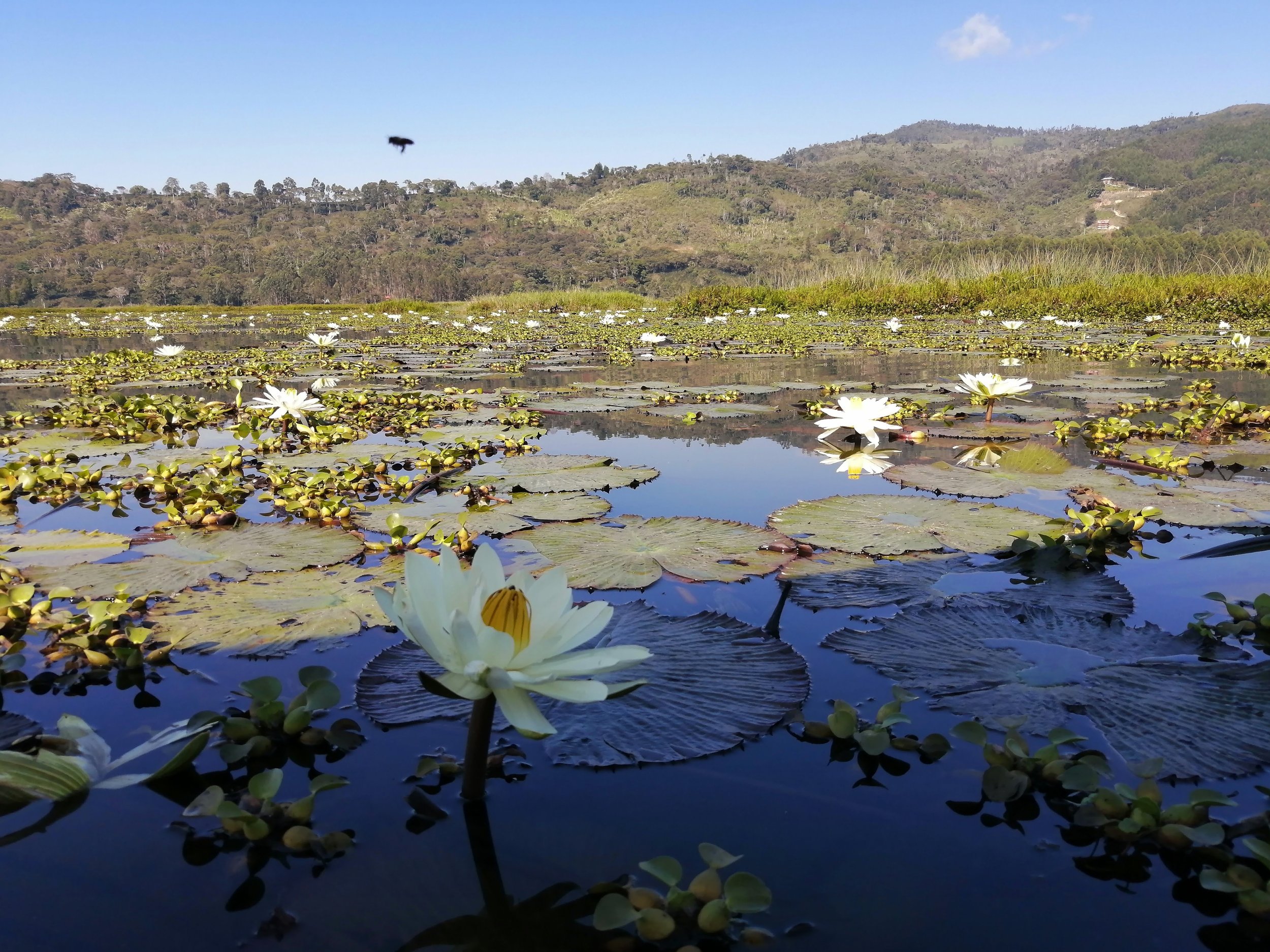
In the afternoon we take a boat ride across the stunning Lago Ocunal, surrounded by cloudforest and mountains. The evening reflection connects what we've seen to global supply chains, fair trade, and economic justice — grounding the day's experience in the broader themes of the program.
DAY 6
Service — Community Day
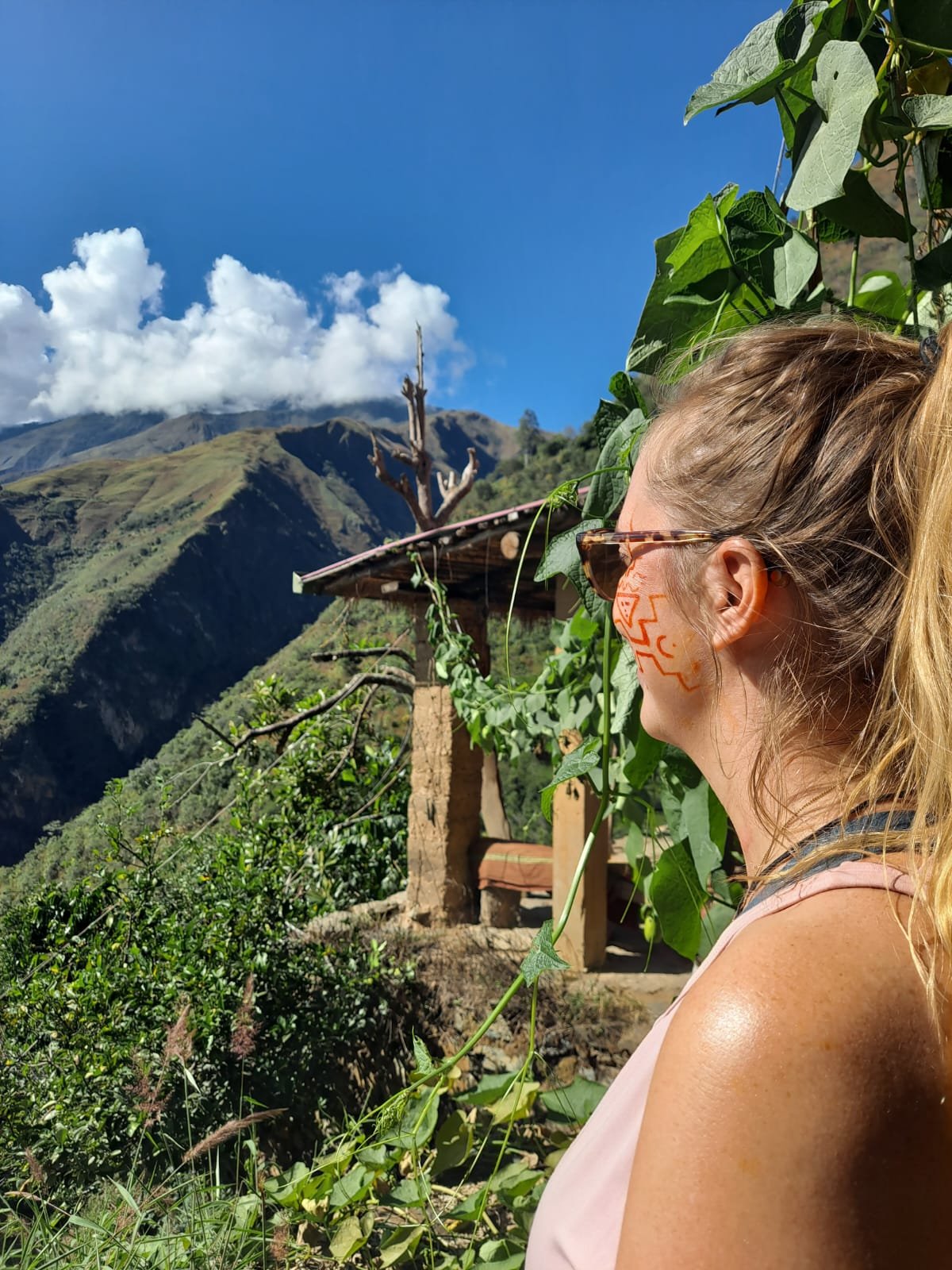
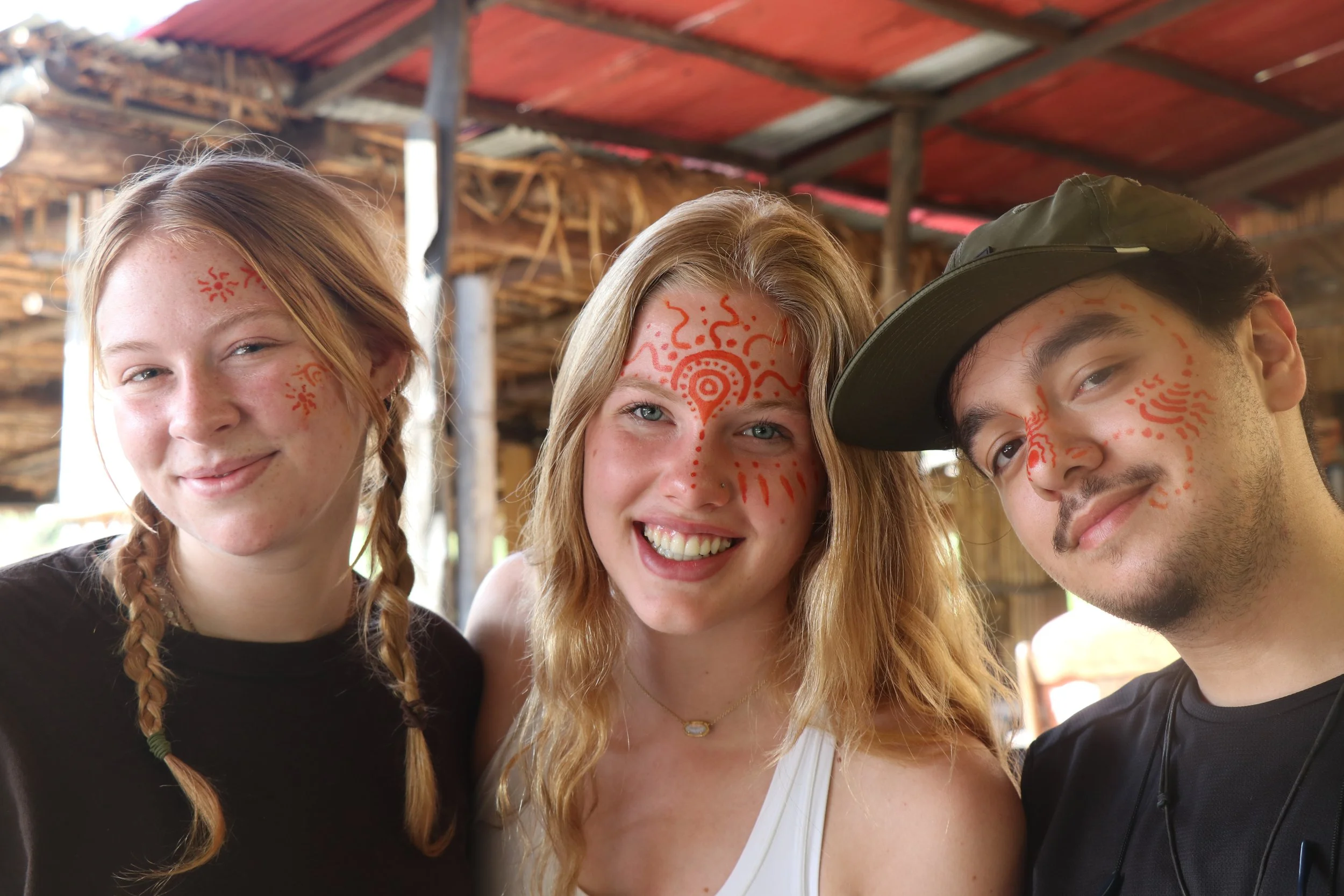
Back to service. With energy renewed from yesterday's excursion, we focus on meaningful progress. Extended lunch in the community today — a local youth leader demonstrates natural dye techniques the community has been developing to maintain traditional cultural practices. A conversation about what cultural preservation really means, and who it's for.
DAY 7
Oxapampa — A Lesson in Colonisation
Today we drive to nearby Oxapampa, founded in the 19th century by Tyrolean and Prussian settlers. The Tyrolean-style architecture set deep in the Peruvian jungle is disorienting in the best possible way.
We visit a local trout farm, an aguardiente distillery, a cave, a yogurt factory, and a waterfall. We also watch a presentation of the distinctive traditional dance of the region.
The evening reflection asks: what does it mean when one culture's architecture becomes another place's 'heritage'? A conversation that carries particular resonance for First Nations Australian students.
DAY 8
Service — Project Push
A full service day with the energy and perspective of the week behind us. We work with focus and purpose, knowing we have passed the midpoint of our time in Villa Rica.
Evening: documentary screening on the history of land rights in the Amazon, followed by open discussion.
DAY 9
Service — Monitoring & Micro-Consultancy
Service continues. Today's work includes an element of project monitoring — reviewing what has been built, what remains, and what sustainable handover looks like. Community members take the lead on assessment.
In the afternoon, students begin developing their micro-consultancy proposals for local foundations and community organisations — applying everything learned so far to a real challenge identified by the Yanesha community.
DAY 10
Leadership Projects — Community Presentations
Students present their micro-consultancy proposals to local community representatives and 3 Bricks facilitators. Real audience, real feedback, real stakes.
This is the leadership challenge at the heart of the program — applying knowledge, empathy, and critical thinking to a genuine community need. Proposals are discussed, refined, and in some cases, adopted.
Evening: celebration dinner with community members.
DAY 11
Service — Final Push
Our penultimate service day. We give everything we have to completing project tasks. It will be exhausting. It will be worth it.
DAY 12
Service — Final Day & Closing Ceremony
For our final service day we wrap up remaining tasks, complete monitoring and evaluation documentation, and discuss community follow-up plans with Yanesha leaders.
In the afternoon, a closing ceremony with community members. Yanesha leaders share traditional dance and music. Students share reflections. A moment that tends to stay with people for a long time.
DAY 13
Farewell & Final Evening in Villa Rica
A slower day. Time to rest, process the experience, write, talk, and say personal goodbyes to the community and the place.
An evening reflection session prepares students for the transition from immersive community work to the historical and cultural landscape of Cusco. What do we carry with us? What do we leave behind?
Final group dinner in Villa Rica. Students share one thing they will take home and one thing they want to change.
-
Jauja → Cusco — Into the Mountains
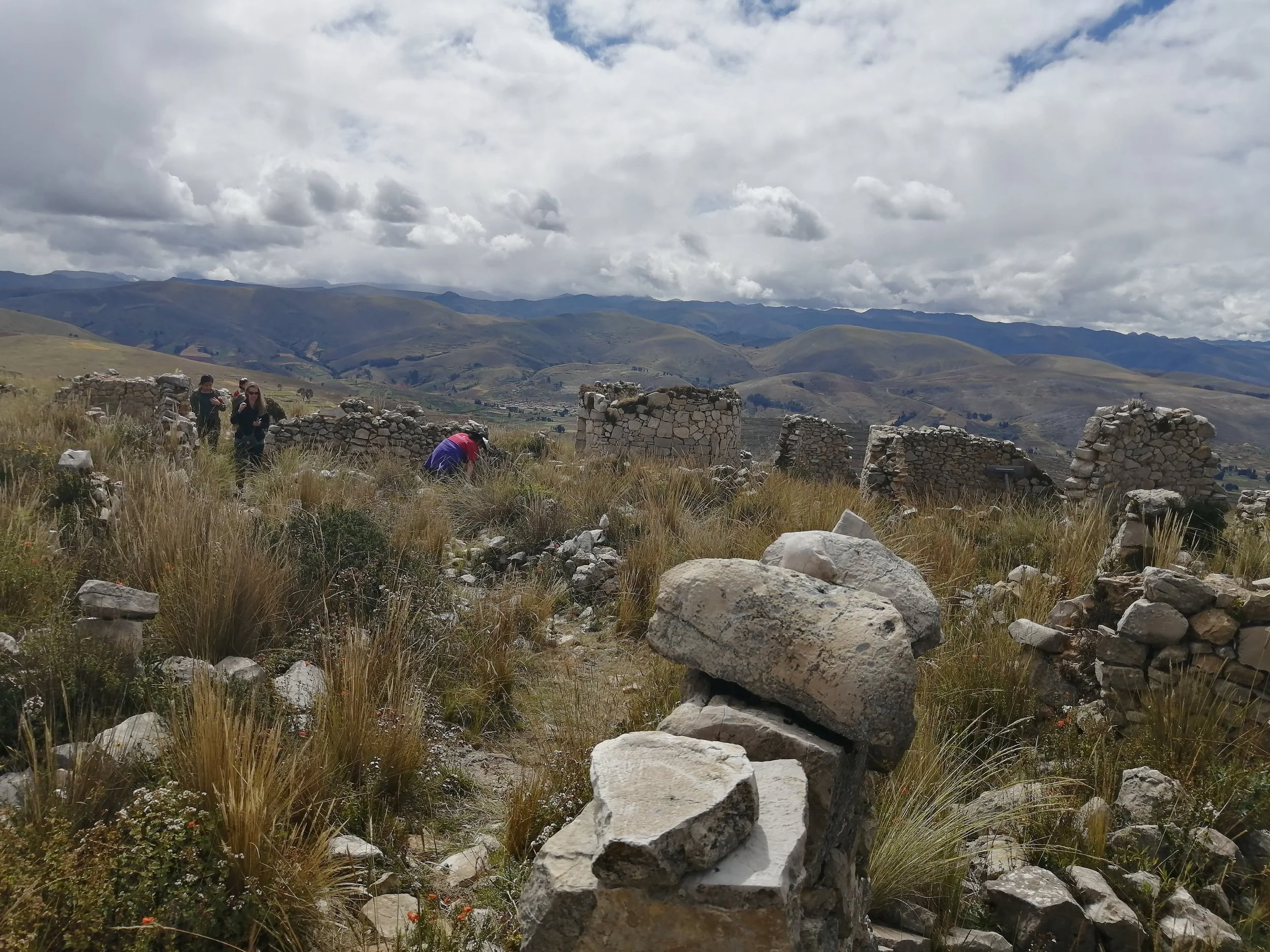
An early start as we return to Jauja for our flight to Cusco. The drive back through the Andes is extraordinary — hydroelectric dams, ancient potato and quinoa terraces carved into hillsides, pre-Incan ruins visible from the road, and if we're lucky, Vicuñas grazing in the highland grasslands.
Arriving in Cusco (3,400m), we travel to our hotel in the historic centre. Here we meet our jungle trek guide for a briefing on the days ahead. Then relax, hydrate, and explore the city at your own pace as we adjust to the altitude.
-
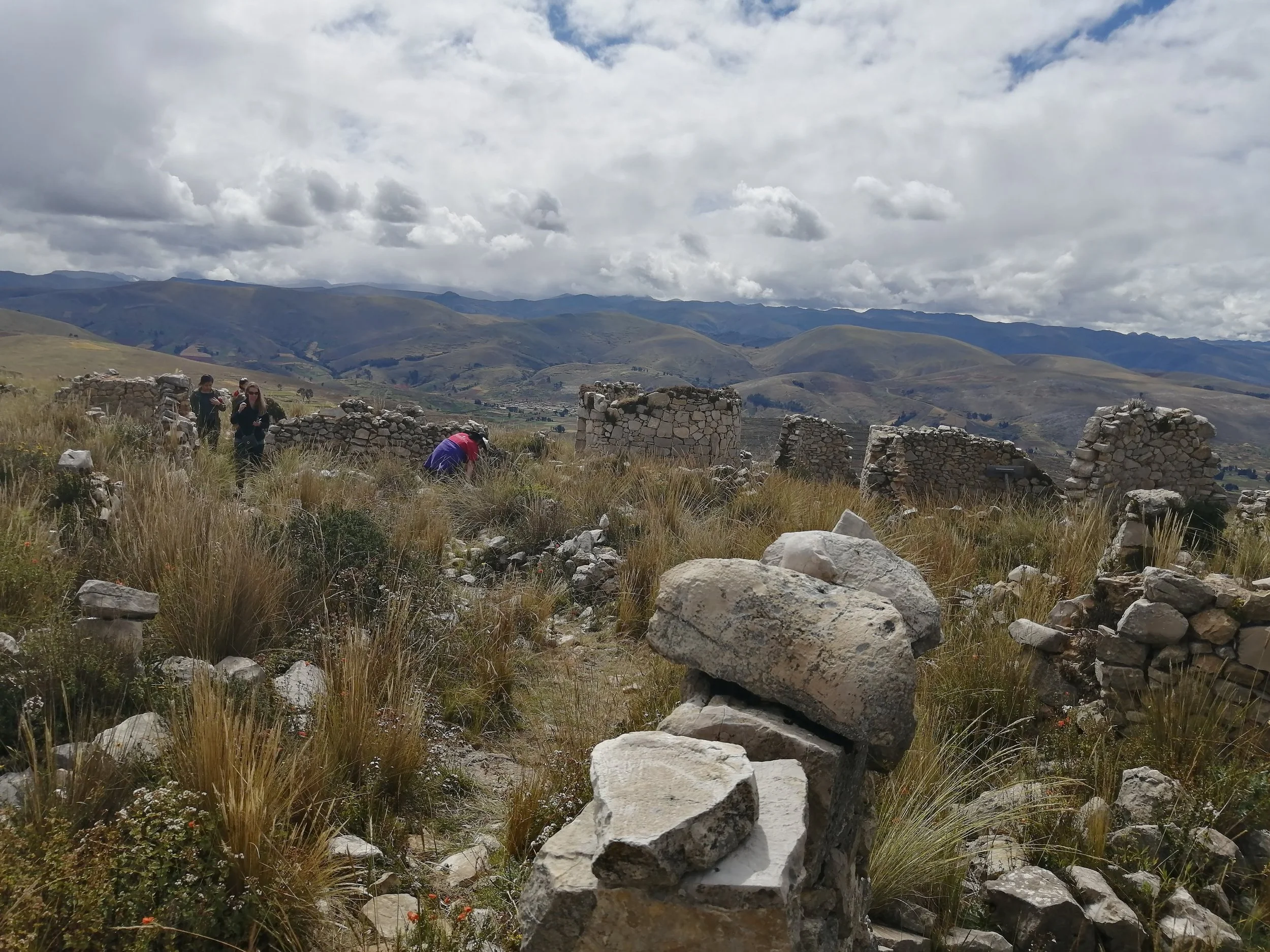
Acclimatise and foot tour of Cusco. We visit the Cusco Cathedral, the San Pedro Market (last chance for gifts), and then climb above the city to the Inca ruins of the Moon Temple and Sacsayhuamán, where the stones of a dismantled Inca empire form the foundation of a colonial church below — a landscape that says everything about conquest without saying a word.
-
DAY 16
Jungle Trek — Sacred Valley
Hot coca tea for breakfast, then a visit to the San Pedro market to stock up on snacks and last-minute hiking supplies.
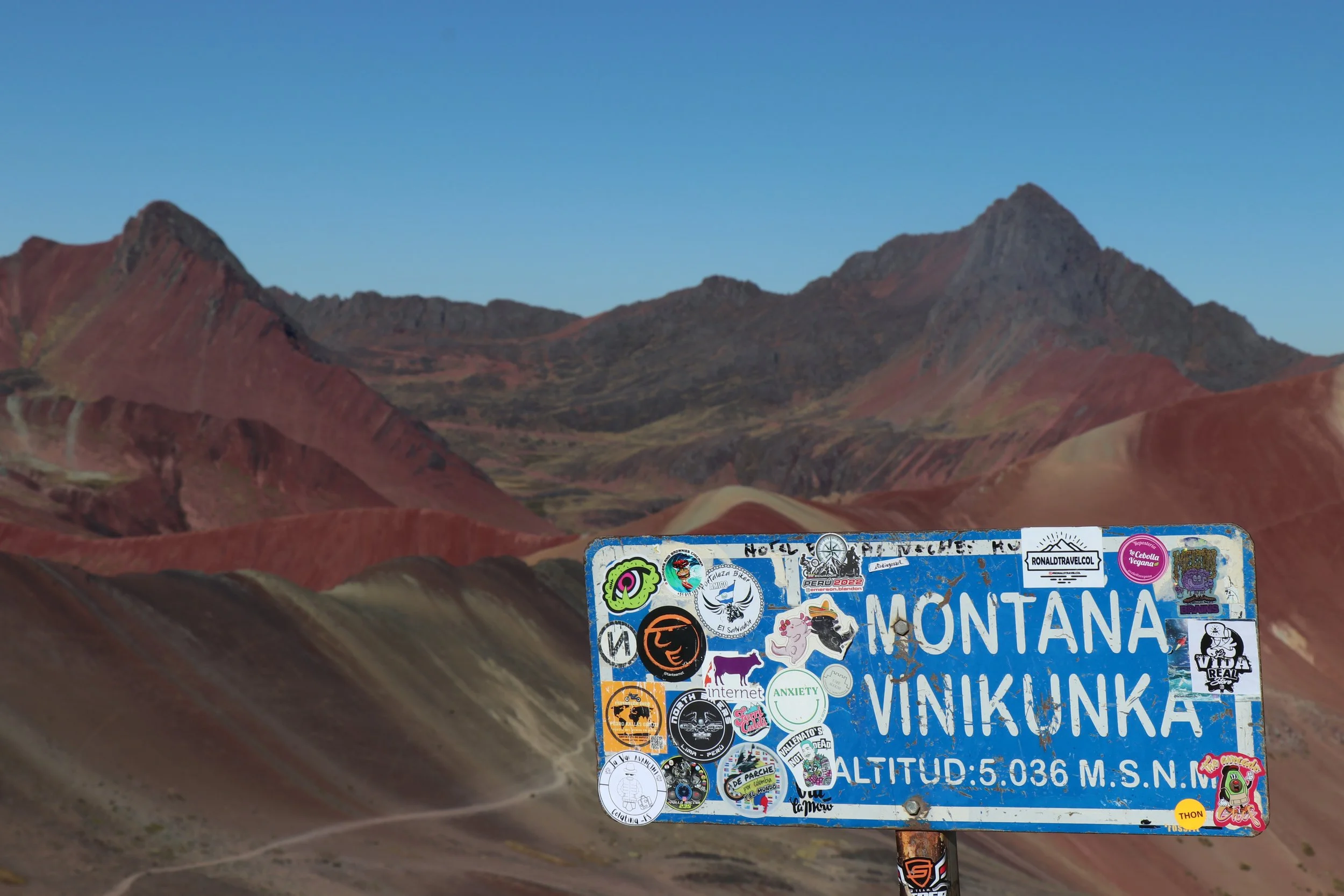
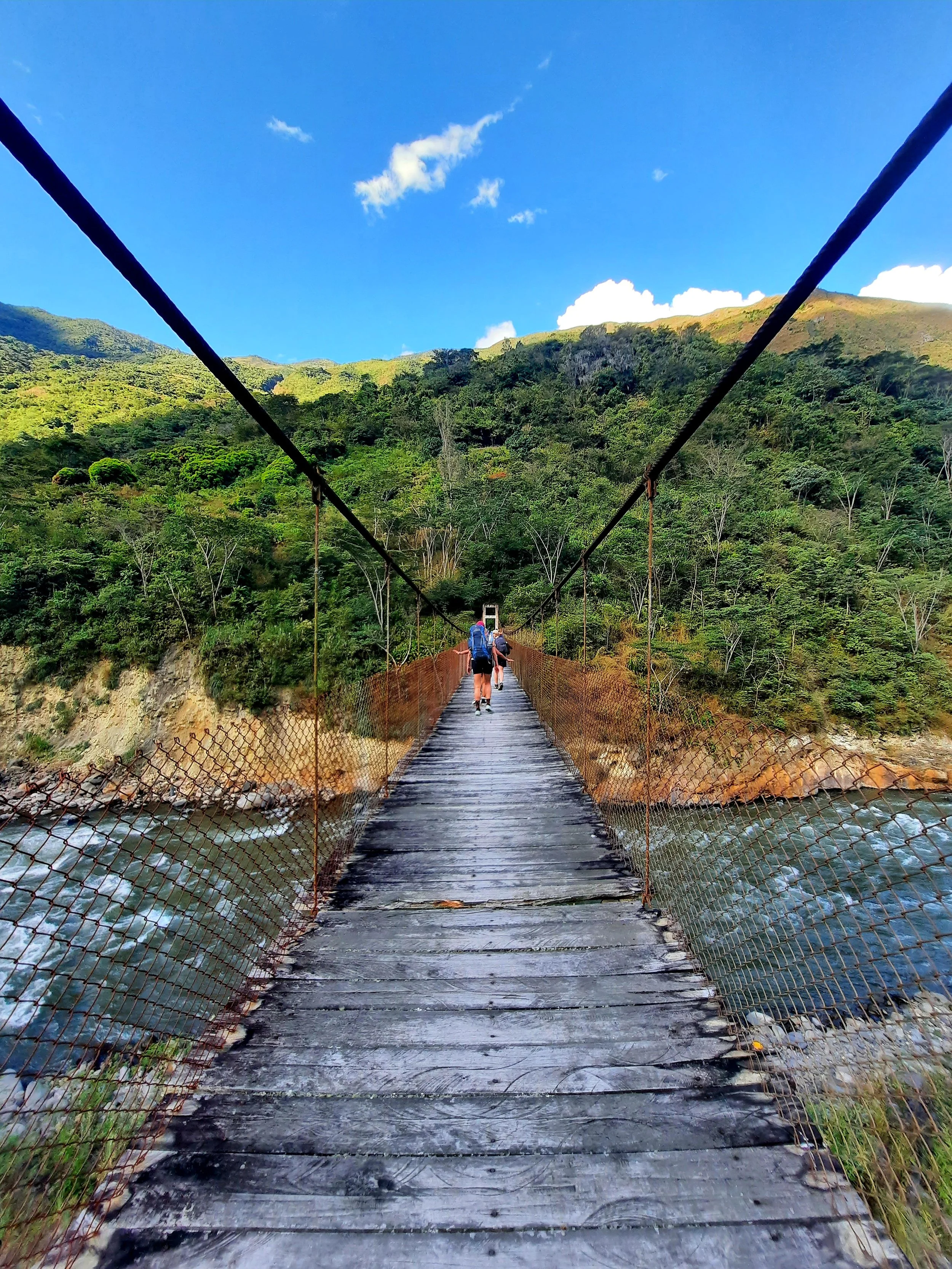
We travel through the Sacred Valley by minivan, stopping for lunch with views over the valley, then begin our hike into the cloudforest to 'Monkey House' — a small homestay set amongst a coffee farm overlooking the Andean valley. One of the most memorable nights of the trip.
DAY 17
Inca Trail — The Most Challenging Day
After breakfast overlooking the valley we begin our hike along the remarkable paths and steep stairs of the Inca Trail — one of the great walks in the world.
After lunch we continue to the natural outdoor hot springs of Santa Teresa, where we relax and watch the sunset over the mountains before checking into our accommodation for the night.
DAY 18
Ziplining → Aguas Calientes
We begin with an adrenaline-pumping zipline adventure across deep Andean valleys — cables almost 1km in length, views that go on forever.
From here we hike to Aguas Calientes — 'Machu Picchu Town' — with a stop for lunch along the way. The evening is spent exploring the local markets, buying last-minute gifts, and getting an early night ahead of the sunrise start tomorrow.
DAY 19
Machu Picchu — Earned, Not Visited
Wake before dawn for the hike to the entrance gate — arriving in time to watch the sunrise illuminate one of the world's most extraordinary sites.
We explore Machu Picchu not as tourists, but as learners who have spent two weeks working alongside Andean communities and earned a deeper understanding of what we are looking at. Our local guide contextualises the site within the broader narrative of Inca civilisation, Spanish conquest, and the enduring strength of Quechua culture.
After lunch in Aguas Calientes, we board the panoramic viewing train back through the Sacred Valley to Cusco. An early night — we have earned it.
-
DAY 20
Cusco Tour — History, Power & Resilience
After a well-earned post-trek rest, a private guided tour of Cusco's most significant historical sites with Jhonn Casani, our long-time Quechua expert and guide. We’ll have a chilled day of celebration and souvenir shopping.
Final group dinner together in Cusco. A celebration of what we have done, and a recognition of what we carry forward.
DAY 21
Departure
Breakfast at the hotel. Then it is time to go.
For early departures: we travel together to Cusco Airport (CUZ). For later departures: one last morning in Cusco — a final sunrise, a final walk through the streets, a final coffee looking out over the city that watched an empire fall and kept standing.
The program ends at Cusco Airport (CUZ). We can assist with onward flight coordination — please let us know your arrangements.
Program Pillars
Ethical Partnership
Ruth Francisco plans and approves every project. We are guests working with the community, never for them. Authenticity is non-negotiable.
Economic Justice
Engage directly with coffee economics, fair trade, and transparent supply chains to understand how global systems affect local communities, and how they can be changed.
Transformative Learning & Global Citizenship
Every activity, reflection, and community partnership is designed to support student growth in intercultural understanding, ethical leadership, critical reflection, and global citizenship. Programs are facilitated by experienced educators with backgrounds in international education, inclusion, youth development, and community engagement.
Decolonised Learning
Reflection, dialogue, and critical engagement are embedded throughout the experience to help students connect local realities to wider global systems, and to understand their own role within them.
Access & Scholarships
Making Global Learning More Accessible
We believe international learning opportunities should not be limited by financial circumstance.
3 Bricks is actively developing partnerships with schools, philanthropic organisations, Indigenous education initiatives, and community sponsors to expand scholarship-supported access for First Nations students and other young people who may otherwise face barriers to participation.
We can provide guidance on ABSTUDY, state and territory Indigenous education grants, school-based funding and excursion budgets, and community foundation programs.
If you are a school, organisation, or funding partner interested in supporting student access, we would love to hear from you.
Practical Information
-
FAST FACTS
Duration: 21 Days / 20 Nights
Cost: AUD $6,800 all-inclusive (see Investment page for details)
Arriving: Jauja Airport (JAU)
Departing: Cusco Airport (CUZ)
Dates: June 2027
Physical ability: Moderate — 4 days of hiking carrying a day pack (Machu Picchu trek)
-
ACCOMODATION
This is multi-homebase based service adventure trip covering Villa Rica, Cusco and the Machu Picchu region.
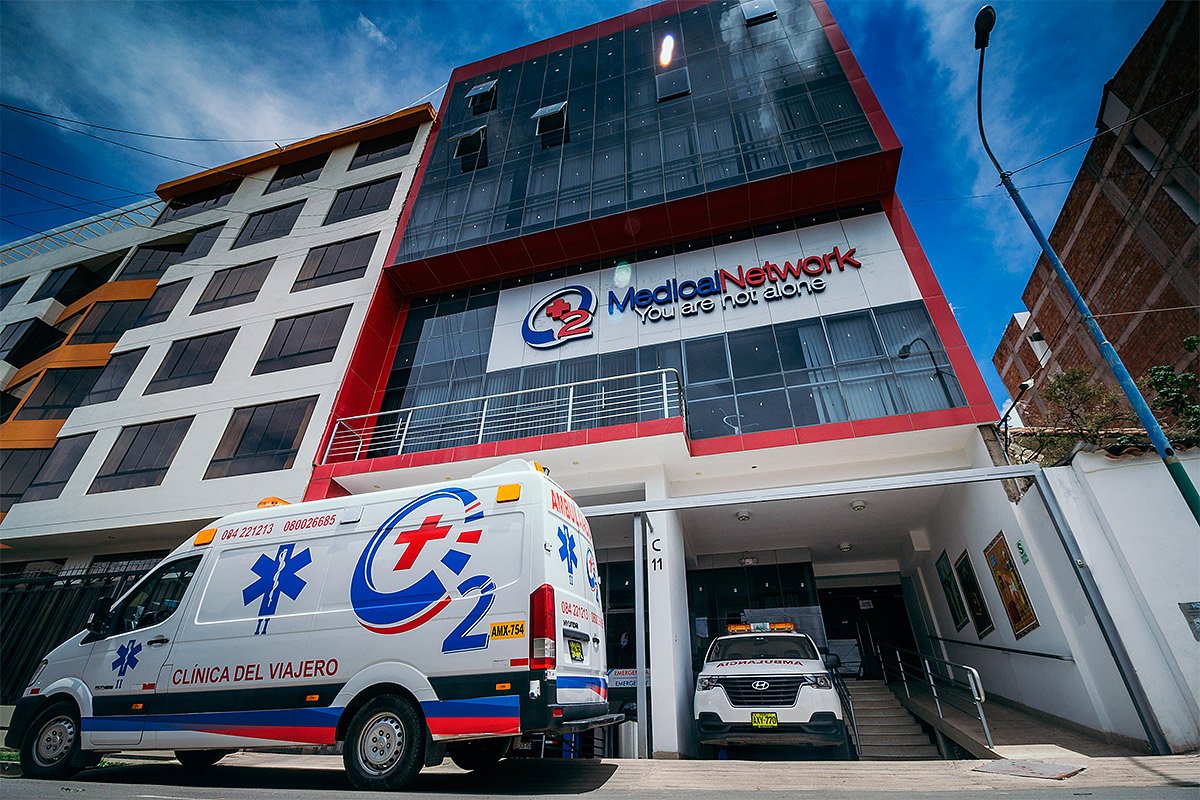
Twelve Nights: Our Homebase in Villa Rica is just a 5-minute walk from the town center and a 2-minute drive from the newly constructed Ramon Egoavil Pando Hospital.
Accommodation in Villa Rica is a colonial German-style Hotel overlooking the town. Maximum 4 students per room.
Four nights: in a 3-star hotel Located by Cusco central historical region
Four nights: Lodging during the jungle trek to Machu Picchu includes a small homestay at ‘Monkey House’ on our first night, tidy hotels after hot springs in Santa Teresa, and the evening before Machu Picchu in Aguas Calientes.
TRANSFERS
Please remember when booking flights that the Program begins at Jauja Airport and terminates at Cusco airport - please let us know if you could like assistance coordinating flights.
WHAT TO PACK
Despite the cold mountain temperatures, and cooler nights time the first week of the program can be quite humid in the amazon. For this reason recommend you bring a few warm items and clothes that you can layer.
A full packing list will be provided after the program deposit is received.
VISAS & VACCINATIONS
You are responsible for your own visa and vaccination arrangements. Please check your country's current guidance well in advance of travel.
Passport: Must be valid for at least 6 months from the date of entry with at least 2 blank pages.
Visa: Tourists do not require a visa. A permit to stay for up to 3 months is issued on arrival. If you overstay your permit, a fine must be paid before departure. Entry and exit conditions can change — contact the nearest Peruvian embassy or consulate for the latest details.
Vaccinations: Refer to your country's official travel health guidance. No specific vaccinations are currently required for entry to Peru beyond the standard schedule.
Ready to take the first step?
Places are limited. Contact us to receive a full application packet and discuss scholarship and funding support.
MEALS
All meals are included while on the program. You will enjoy traditional peruvian breakfasts, lunches prepared by supports staff or at local restaurants, and lighter Peruvian dinners at our accomodation or in small restaurants.
INTERNET
Only some accommodation spaces have complimentary wifi and cellphone reception is sporadic on parts of the trip. We encourage the opportunity to disconnect for the trip.
AVAILABILITY & PRICES
$AUD6,800 per person based on 2-4 sharing accommodation for 21 days / 20 nights. Single accomodation person supplement: $850.
2027
June 1- 21
WHAT'S INCLUDED
All shared accommodation (maximum 4 per room) — Villa Rica, Cusco, and trek lodges
All meals from arrival dinner to departure breakfast (breakfast, lunch, dinner)
Drinking water throughout
24/7 qualified international bilingual staff
All site entrance fees including Machu Picchu, Moray, Maras Salt Mines
All service project materials
All in-country transport from Jauja airport to Cusco airport (including internal flight Jauja→Lima→Cusco and train Machu Picchu→Cusco)
WHAT’S NOT INCLUDED
International airfare to Jauja (JAU) and from Cusco (CUZ)
Travel insurance — mandatory, must include medical evacuation
Soft drinks and personal spending
Vaccinations or visa fees where applicable
Peru
The currency in Peru is the Peruvian Sole (PEN). Cards are readily taken in cities and tourist areas, however in more remote areas - during service and hiking, it’s best to have some cash with you - you can withdraw at the Lima Airport in transit, or we can help you exchange from USD.
Time Zone: GMT-5
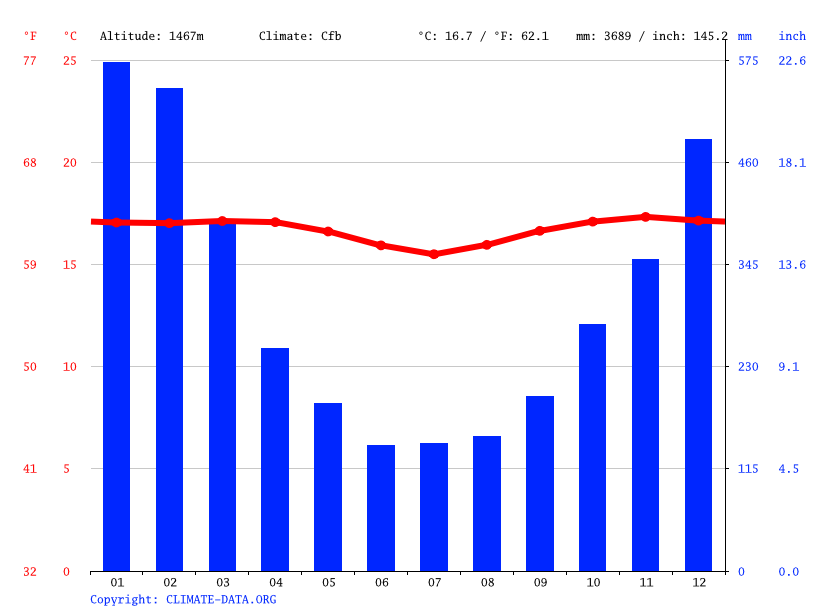
The climate of Peru is Varied across the country and throughout the year. Although June is the driest month of the year in both Cusco and Villa Rica, rain is still typical. Average temperatures for June typically range from 13 – 20C in Villa Rica to 2 – 12C in Cusco.
Despite the cool temperatures, the sun during the day can be quite warm and sunburn is common with the thinner atmospheric protection at altitude, wearing clothes that layer is a good idea, and nights become much cooler than days, especially in Cusco.
Climate
Villa Rica

Cusco
Villa Rica
Cusco